Payday OffSec Walkthrough Link to heading
This walkthrough documents the full compromise of the OffSec “Payday” target machine. The attack path involves classic recon, discovery of an outdated CS-Cart e-commerce panel, authenticated file upload leading to RCE, and finally a privilege escalation via weak local user credentials and unrestricted sudo access. Despite a large attack surface (SMTP/IMAP/SSLv2/Samba 3.x/etc.), the intended path is surprisingly simple—but easy to overlook.
1. Reconnaissance Link to heading
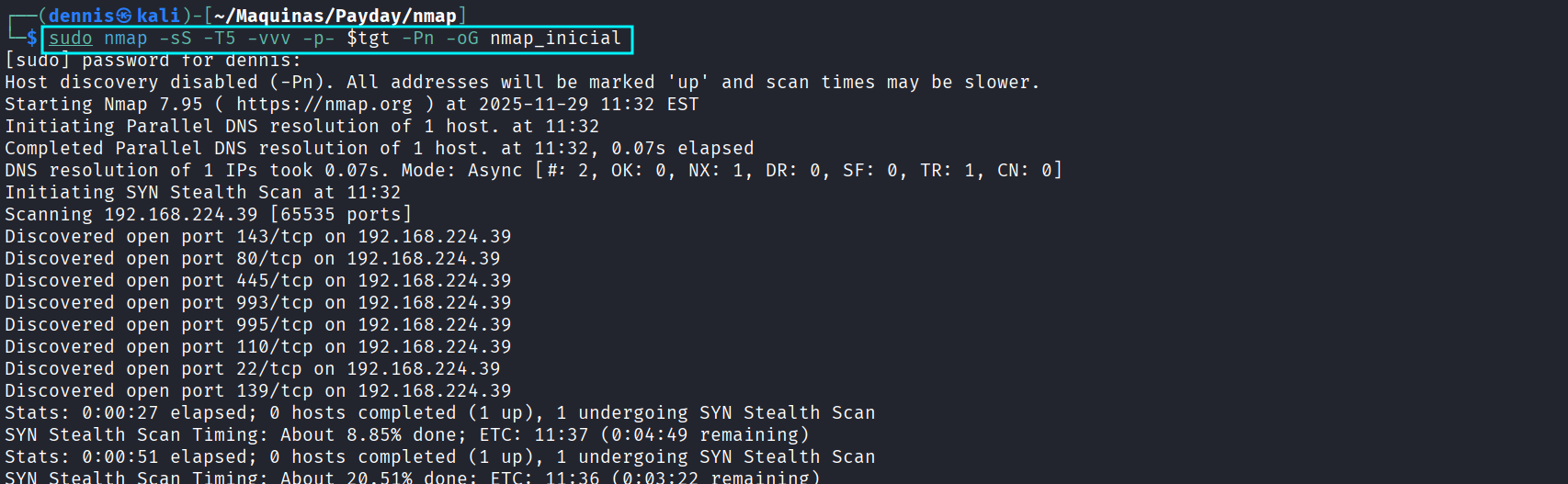
A full SYN scan is then launched:
sudo nmap -sS -T5 -vvv -p- $tgt -Pn -oG nmap_inicial
Scan reveals multiple services including:
- Apache + PHP 5
- Dovecot (IMAP/POP3, SSLv2 enabled)
- Samba 3.0.26a
- OpenSSH 4.6p1
- CS-Cart web application
- A variety of outdated, potentially vulnerable services
Next, a version and script scan of the discovered ports:
sudo nmap -sCV -vvv -p22,139,445,631,2181,2222,8080,8081,34051 $tgt -oN nmap_exhaustive
Notable Findings: Link to heading
- Apache 2.2.4 + PHP 5.2.3: extremely old, many known vulnerabilities.
- Dovecot (IMAP/POP3) with SSLv2 enabled: deprecated, vulnerable protocol.
- Samba 3.0.26a: version affected by multiple exploits (e.g., CVE-2007-2447 — “LNK exploitation”).
- CS-Cart store running version 1.3.3, which is publicly known to support authenticated RCE via template upload.
- Many SSL certificates dated 2008 → clearly an old Ubuntu system.
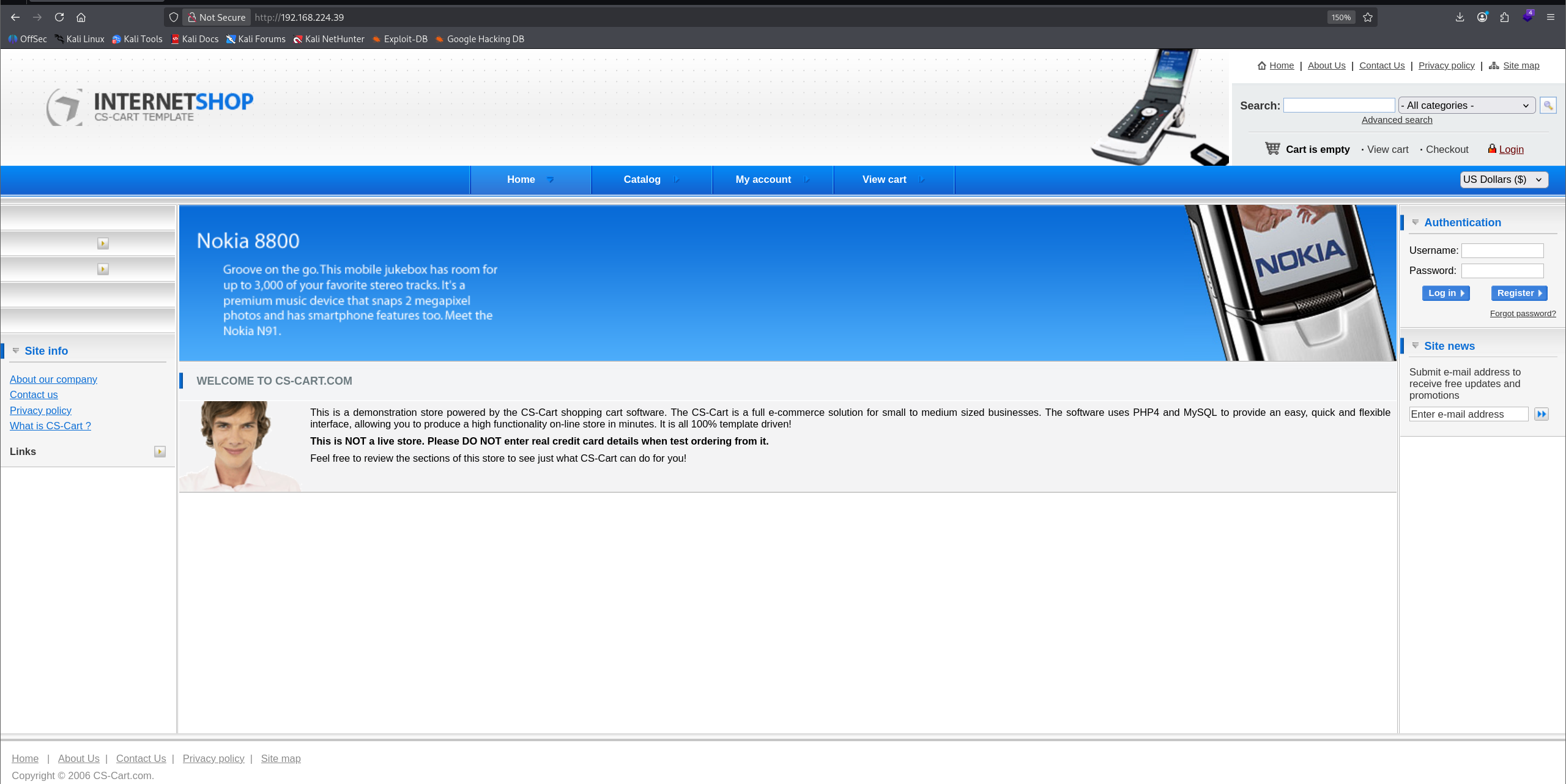
We also have a web portal, so the recon proceeds:
Directory brute-force with feroxbuster:
feroxbuster -u http://192.168.224.39 -w /usr/share/wordlists/seclists/Discovery/Web-Content/directory-list-2.3-medium.txt
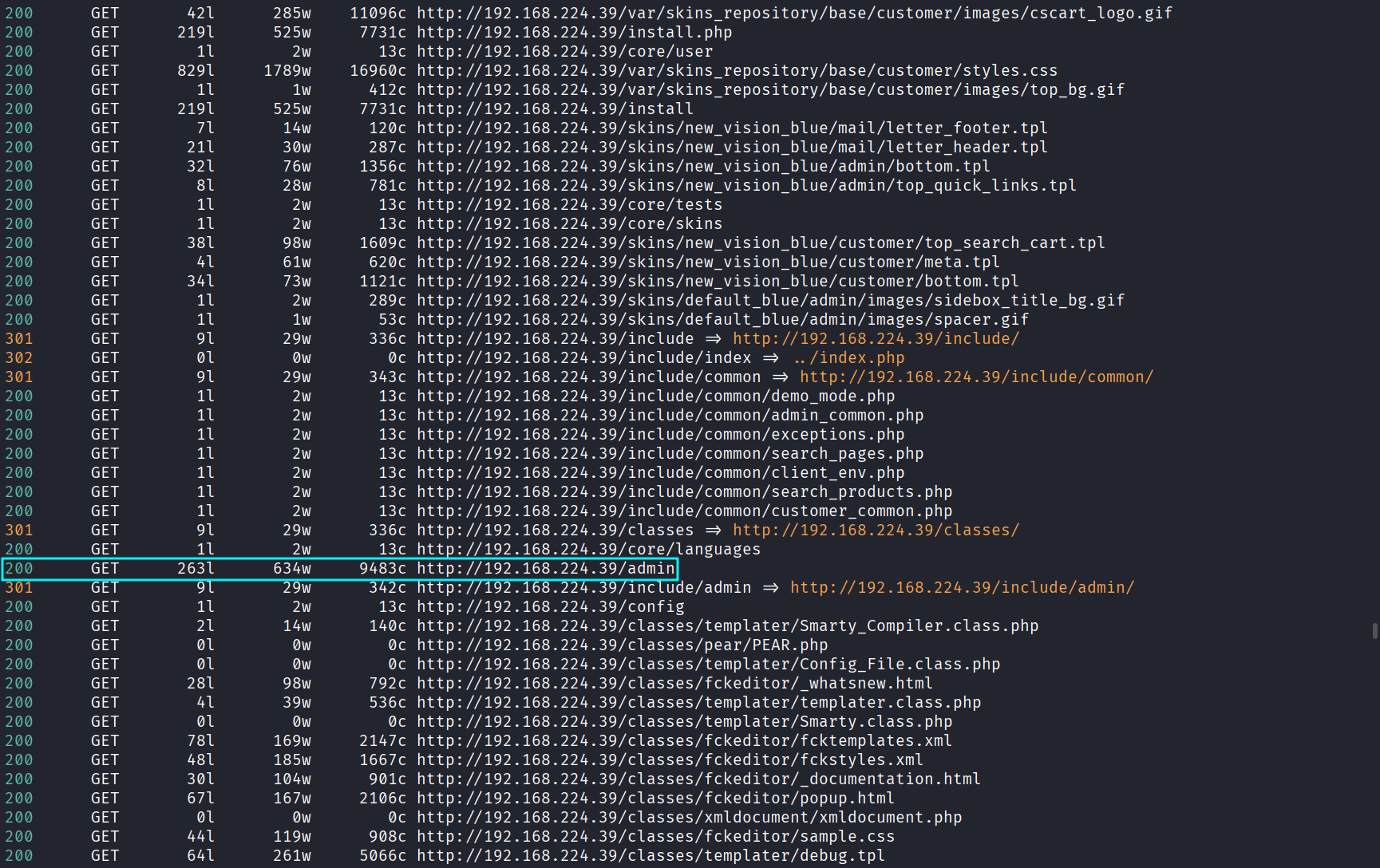
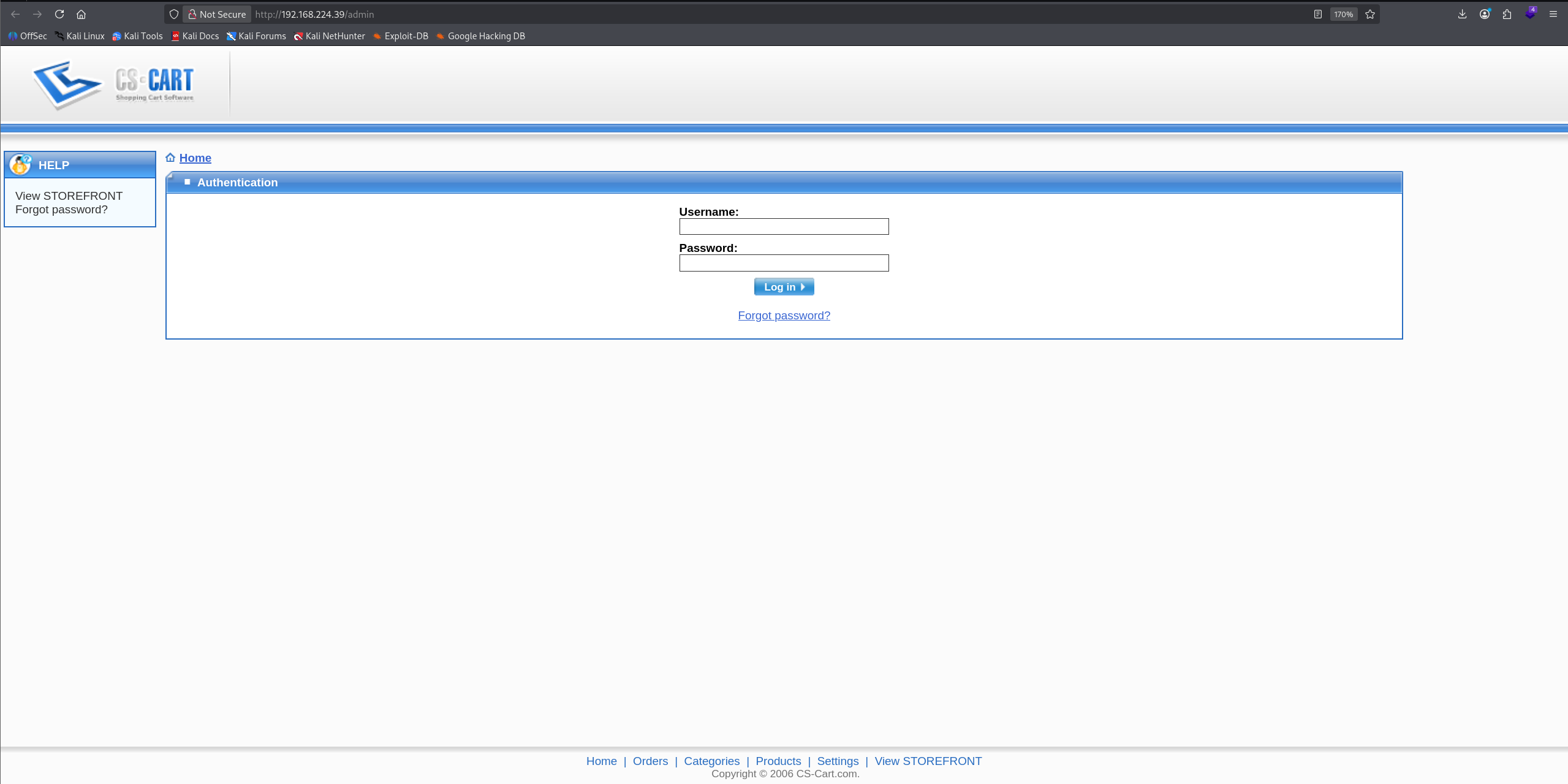
An admin panel is identified.
Credentials admin:admin work.
Once authenticated, the CS-Cart version is visible:
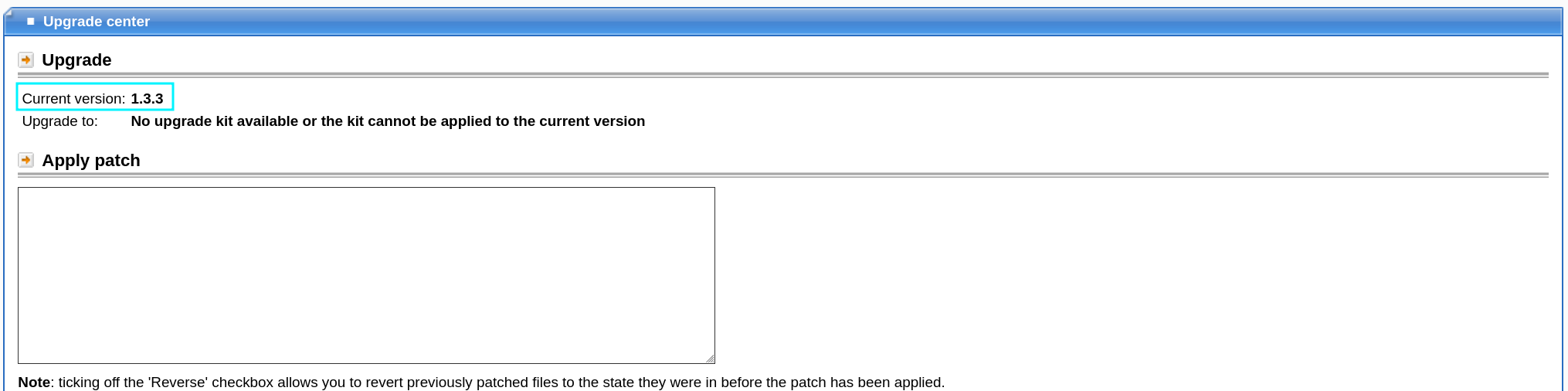
Version: 1.3.3 — vulnerable to authenticated RCE (Exploit-DB 48891).
Exploit summary:
- Upload a PHP reverse shell via the template editor
- Rename extension to .phtml
- Access it in the skins directory to trigger execution
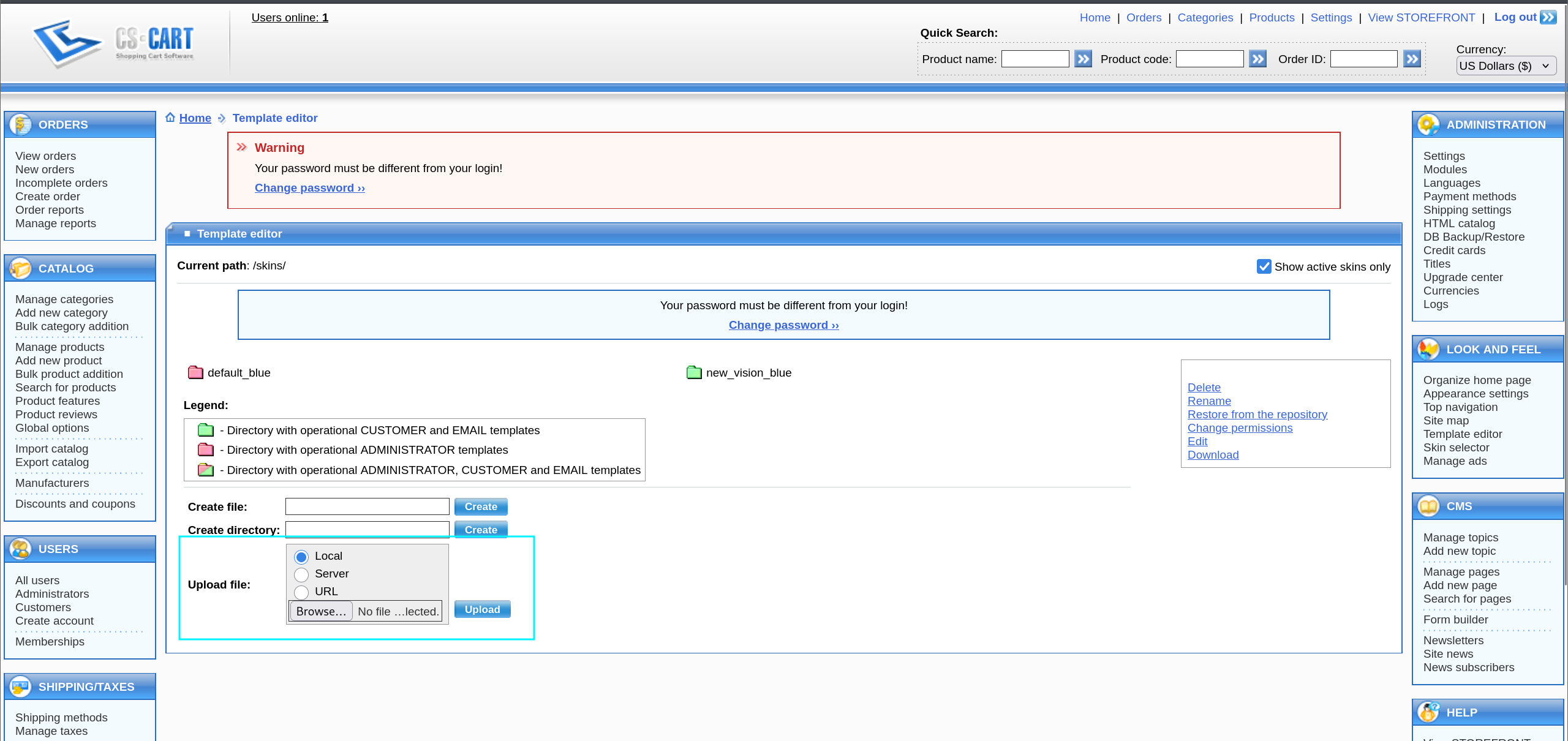
After uploading shell.phtml, visiting:
http://[victim]/skins/shell.phtml
…gives us a reverse shell:
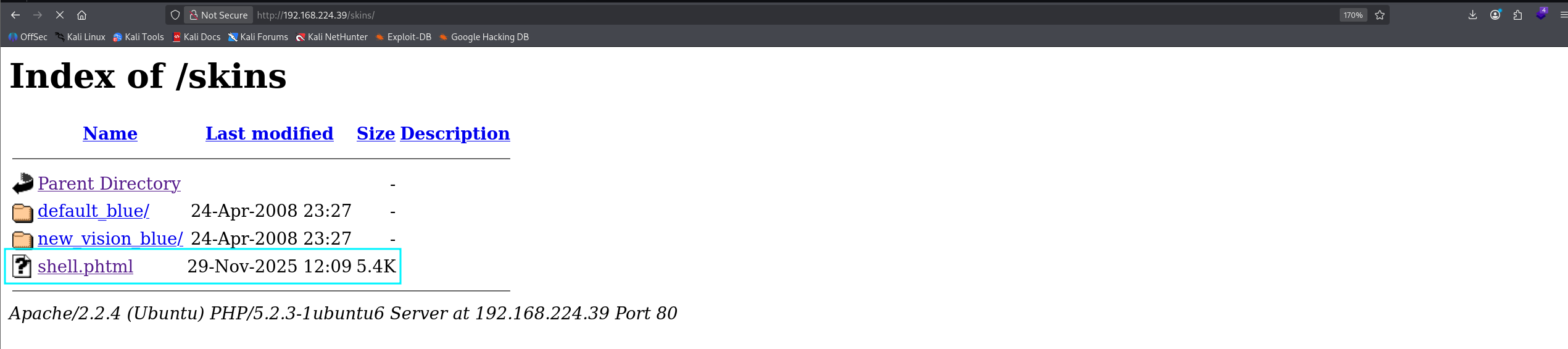
We are now www-data.

2. Exploitation & Privilege Escalation Link to heading
LinEnum is executed (LinPEAS fails for some reason).
One of the findings is a MySQL login accessible from www-data:
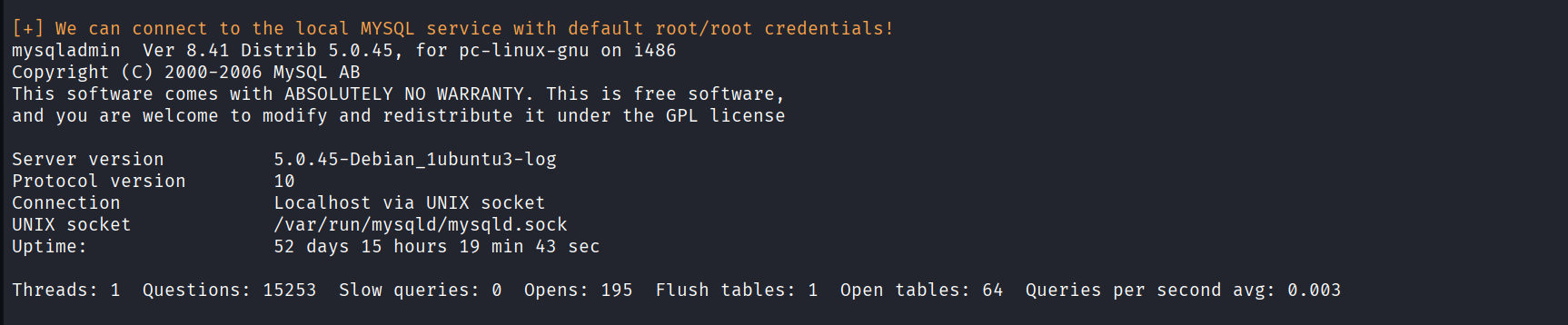
Although the DB is accessible, the data inside is useless for privilege escalation:
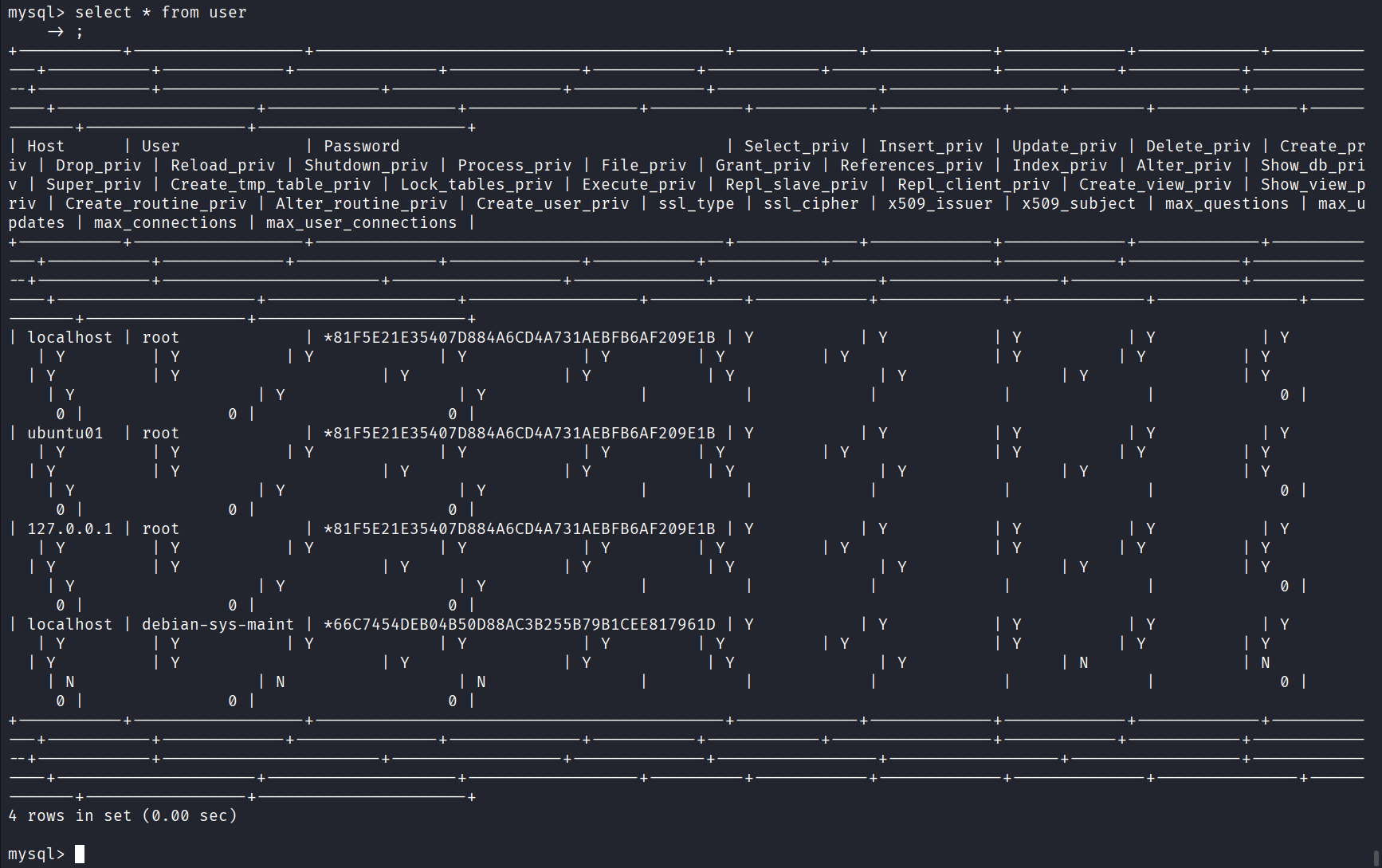
It’s easy to get tunnel vision here, but the key lies elsewhere.
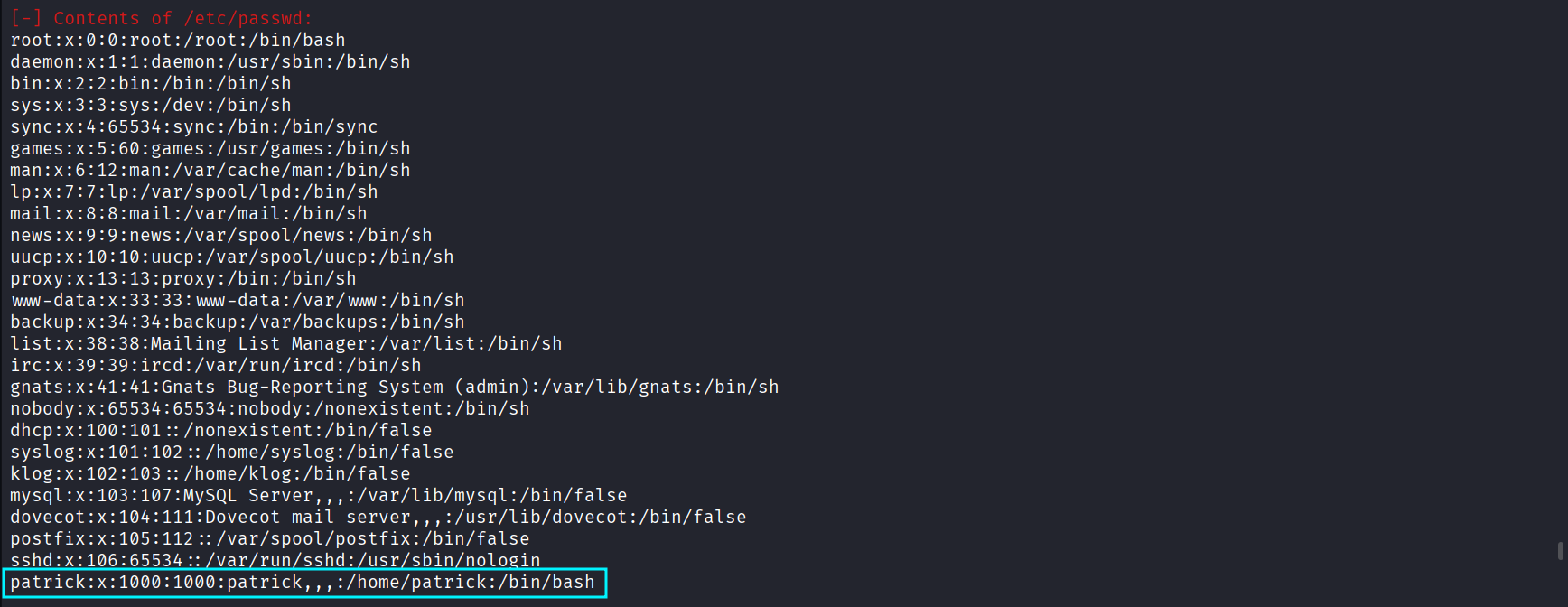
The crucial discovery: Link to heading
The system contains a user named Patrick:
Trying the obvious, weak password:
patrick
…works.
We switch to the user:
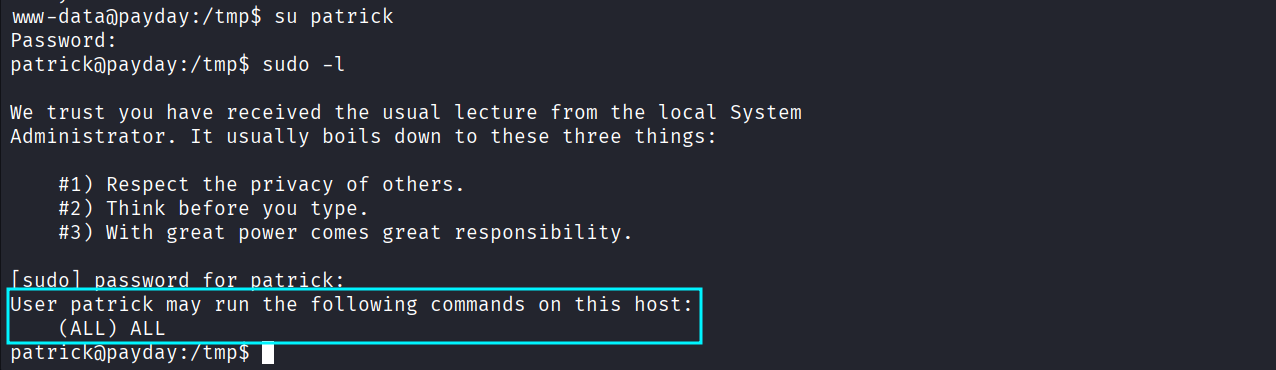
Patrick has full sudo rights:
sudo -l
→ (ALL : ALL) ALL
Meaning: root is one command away.
We retrieve escalate and retrieve the proof:

Machine fully compromised.
Moral of the story: always test weak credentials — even if the system looks complicated. PWNED :)
3. Attack Mitigation Link to heading
To prevent this compromise, the following measures should be applied:
Web Application Link to heading
- Update or decommission CS-Cart 1.3.3 — it is critically outdated and contains RCE flaws.
- Enforce strong admin credentials; prevent default/weak passwords.
- Restrict file upload functionality; whitelist extensions and disable .phtml execution.
- Move administrative panels behind VPN or IP allowlists.
System Configuration Link to heading
- Remove legacy software: PHP 5, Apache 2.2, OpenSSH 4.6p1, Samba 3.x, Dovecot SSLv2.
- Disable SSLv2 across all services.
- Keep certificates up-to-date and use modern ciphers.
Privilege Management Link to heading
- Enforce strong user passwords.
- Remove unnecessary sudo permissions.
- Audit
/etc/sudoersregularly.